
 Kha Y Tran
 Elderwood returns in TFT Set 18 with a new mechanic. Instead of gaining stats over time, the trait now summons special Saplings. These units fight beside your champions.
The Saplings can tank damage, heal allies, and support the team. Therefore, Elderwood can stay strong in long fights. It can also fit into many team comps.
Because of its flexible champion list, Elderwood may become a popular trait in Teamfight Tactics Set 18.
For more meta team comps, visit https://op.gg/tft/meta-trends/comps.
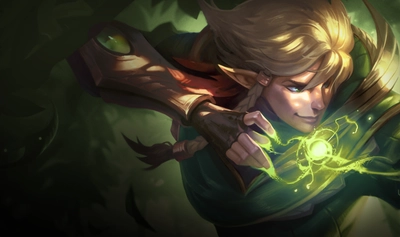
What Is Elderwood in TFT Set 18?
Elderwood has changed a lot in TFT Set 18. In older sets, the trait gave champions more stats as the fight continued. However, its new version focuses on summoned units. When players activate Elderwood, they gain magical Saplings. These units can be placed on the board and join each battle.
Each Sapling has a different job. Some protect the frontline. Meanwhile, others heal allies or add more damage.
As a result, Elderwood gives players extra units during combat. This helps the main carries stay safe. It also makes the team harder to defeat.
In addition, the trait works well in long fights. The Saplings can delay enemy units while your carries deal damage from the backline.

All Elderwood Champions in TFT Set 18
Elderwood has eight champions. They range from 1-cost to 5-cost units.
| Champion | Cost | Class |
|---|---|---|
| Ornn | 1 Gold | Sentinel |
| Xayah | 2 Gold | Rapidfire |
| Alistar | 2 Gold | Bruiser |
| LeBlanc | 3 Gold | Sorcerer |
| Hecarim | 3 Gold | Vanguard |
| Ezreal | 4 Gold | Rapidfire |
| Gnar | 4 Gold | Bruiser |
| Lux | 5 Gold | Sorcerer |
This champion list is one of the trait’s main strengths. Since Elderwood has units at every cost level, players can use it from the early game to the final stages.
For example, Ornn, Xayah, and Alistar can form an early Elderwood board. Later, players can add Hecarim and LeBlanc. Finally, Ezreal, Gnar, and Lux can complete the late-game team.
Moreover, the champions have several useful classes. Elderwood includes Bruisers, Sorcerers, Rapidfire units, Sentinels, and Vanguards.
Therefore, players do not need to follow one fixed team comp. Instead, they can build around the units and items they find.
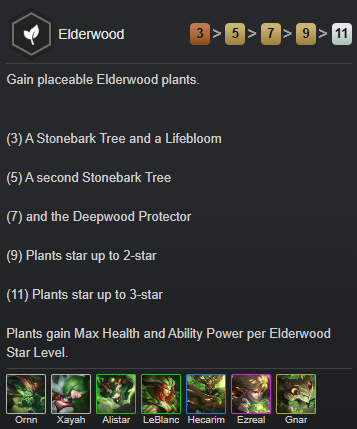
Elderwood Trait Bonuses Explained
The main Elderwood mechanic is its ability to summon Saplings.
When players reach a new trait level, they receive more Saplings or stronger versions of them. These units can then be placed on the board.
3 Elderwood
At three Elderwood, players gain two Saplings:
- Stonebark
- Lifebloom
Stonebark is a frontline tank. It can absorb damage and protect weaker units.
Meanwhile, Lifebloom is a support unit. It helps the team recover health and survive longer.
Together, these Saplings give Elderwood a strong early game. Stonebark protects the board, while Lifebloom adds healing.
As a result, players can save health and build a winning streak more easily.
5 Elderwood
At five Elderwood, players gain a second Stonebark.
This extra tank makes the frontline much stronger. Therefore, enemy units need more time to reach the backline.
Meanwhile, Ezreal, Xayah, LeBlanc, or another carry can deal damage from a safer position.
This level is useful during the middle of the game. It gives the team more defense without needing many extra tank items.
7 Elderwood
At seven Elderwood, players unlock the Deepwood Protector.
This is the trait’s strongest summoned unit. It adds more power and defense to the frontline.
Because of this, seven Elderwood may become an important late-game goal. The Deepwood Protector can keep enemies busy while your main carries attack.
However, reaching this level may require strong economy or an Elderwood Emblem.
9 and 11 Elderwood
The highest Elderwood levels improve all Saplings.
- At 9 Elderwood, the Saplings become 2-star units.
- At 11 Elderwood, the Saplings become 3-star units.
In addition, the Saplings gain more maximum Health and Ability Power.
Their bonus stats also depend on the star levels of your Elderwood champions. Therefore, upgrading Elderwood units makes the summons stronger as well.
For this reason, three-star units may provide more value than usual in a full Elderwood team.
Still, the highest trait levels will be difficult to reach. Players will likely need Emblems, trait Augments, or other special bonuses.

How to Play Elderwood in TFT Set 18
Early Game
During the early game, look for:
- Ornn
- Alistar
- Xayah
These units provide a simple Elderwood starting board.
Ornn and Alistar can protect the frontline. Meanwhile, Xayah can deal damage from the backline.
Once three Elderwood is active, Stonebark and Lifebloom will also join the team. Therefore, the board becomes stronger without needing many expensive champions.
At this stage, focus on saving health. In addition, use temporary items on Xayah or another early carry.
Players should not reroll too early unless they find many copies of Xayah, Alistar, or Ornn.
Mid Game
At Level 6 or Level 7, players can add:
- Hecarim
- LeBlanc
Hecarim gives the team another frontline option. Meanwhile, LeBlanc adds magic damage.
At this point, the board can move toward five Elderwood. The second Stonebark will then make the frontline much harder to defeat.
However, players should stay flexible. For example, they can add more Bruisers if they need defense. On the other hand, they can add Sorcerers if LeBlanc has strong items.
If many copies of Xayah or LeBlanc appear, a reroll plan may also work. Still, players should only reroll when they have enough gold and a good number of copies.
Late Game
At Level 8 or Level 9, players should look for:
- Gnar
- Ezreal
- Lux
These units give Elderwood a major late-game power boost.
Ezreal can act as the main physical damage carry. Meanwhile, Lux can become the main magic damage carry.
Gnar supports the frontline with defense and crowd control. Therefore, he gives Ezreal and Lux more time to use their skills.
If possible, players should aim for seven Elderwood. The Deepwood Protector adds another strong unit to the board.
However, a full Elderwood team is not always required. Sometimes, five Elderwood with strong support units will perform better than a weak seven Elderwood board.
Best Elderwood Carries
Ezreal
Ezreal is likely to be the main AD carry for Elderwood.
The summoned Saplings protect him during combat. Therefore, he has more time to attack and use his ability.
He should usually stand in the backline. In addition, players should keep him away from enemy assassins or strong area damage.
Attack Damage, Attack Speed, and critical strike items may work well on him. However, his best build may change after balance updates.
Lux
Lux is the main late-game AP option.
Because Elderwood can create long fights, Lux may cast her ability several times. As a result, she can deal high magic damage over the full battle.
Players should place her in a safe backline position. Mana and Ability Power items will usually help her cast faster and hit harder.
Lux is also a 5-cost champion. Therefore, players should not depend on finding her too early.
Xayah
Xayah is a possible 2-cost reroll carry.
If players find many copies early, they can try to upgrade her to three stars. A strong Xayah can then carry the team through the early and middle stages.
However, this plan needs a good economy. It also depends on whether other players are buying Xayah.
If the reroll plan does not work, players can move her items to Ezreal later.
LeBlanc
LeBlanc may become another reroll carry.
She can add useful magic damage during the middle of the game. In addition, she can activate Sorcerer with Lux or other units.
However, her best items and team comps are not clear yet. Therefore, players may need more testing once TFT Set 18 goes live.
When Should You Play Elderwood?
Elderwood is a good choice when several conditions are met.
First, the trait is easier to play when you find many Elderwood units early. This allows you to activate three Elderwood without spending too much gold.
Second, an Elderwood Emblem can help you reach seven or more units. Therefore, Emblems and trait Augments can greatly improve the team.
Third, your items should match your carries. AD items can go to Xayah or Ezreal. Meanwhile, AP and Mana items can go to LeBlanc or Lux.
Elderwood is also useful when you want to play flexibly. Since its champions have many classes, the trait can connect with several other team comps.
However, players should avoid forcing full Elderwood every game. Without Emblems or strong late-game units, the highest trait levels may be too difficult to reach.
In that case, three or five Elderwood can still provide useful frontline support.
Is Elderwood Strong in TFT Set 18?
Elderwood looks like one of the most interesting traits in TFT Set 18.
Its Saplings provide extra tanks, healing, and support. Therefore, the trait can create a strong and stable board.
Moreover, Elderwood has champions at every cost level. This makes the move from the early game to the late game much easier.
The trait is also flexible. Players can combine it with Bruisers, Sorcerers, Rapidfire units, or other useful classes.
However, its final strength will depend on balance changes. Riot Games may adjust the Saplings, champions, or trait levels after the set launches.
Even so, Elderwood has strong potential. It can help new players build a simple frontline. At the same time, experienced players can use it as a flexible base for many different teams.
Overall, Elderwood may become one of the safest traits in TFT Set 18. It offers defense, healing, and several carry options. Most importantly, it allows players to change their plans based on the units and items they find.
Read more:
TFT Set 18 Wisps Guide: New Wisp Mechanic Explained
TFT Set 18: Three New Diamond Augments Explained
#TFTSet18 #TeamfightTactics #RiotGames



2 thoughts on “How to Build the Best Elderwood Team in TFT Set 18”