Quynh Bui
 Train to Busan 3: The Last Station – A Brutal End to Humanity’s Final Journey
After the global success of Train to Busan (2016) and the darker sequel Peninsula (2020), the Korean zombie franchise returns once more. This time, Train to Busan 3: The Last Station delivers a grim and emotional farewell.
Rather than reinventing the genre, the film chooses a different path. Instead, it focuses on loss, exhaustion, and the cost of survival. As a result, the tone feels heavier than ever.
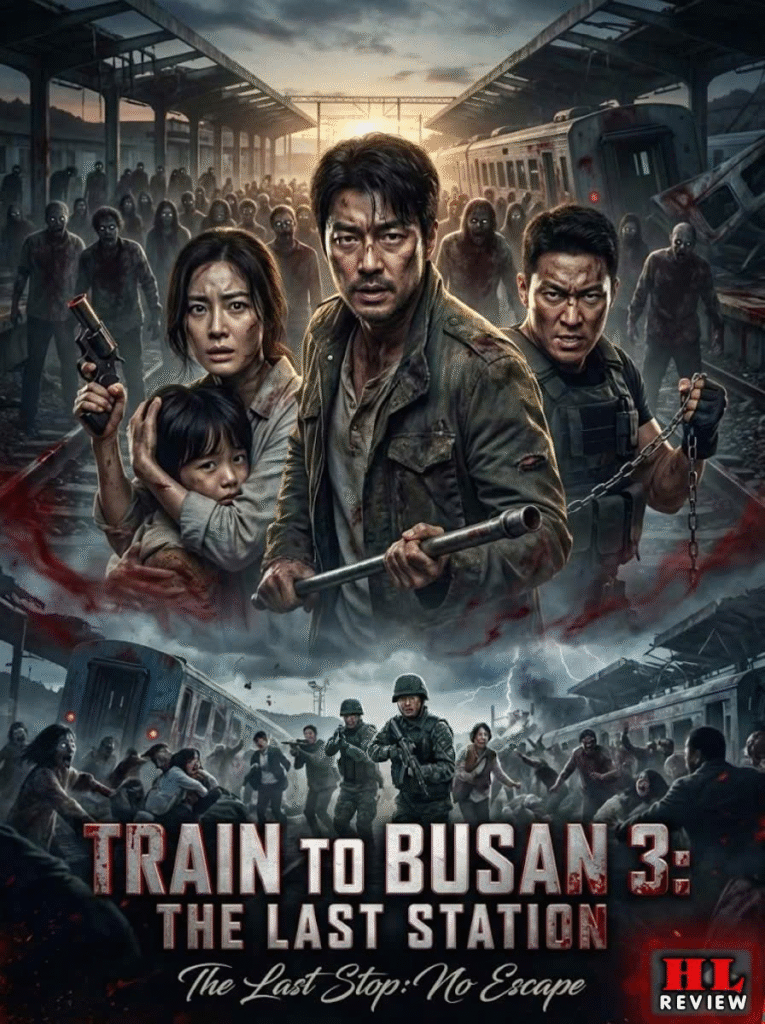
Plot Overview: The Last Stop Has No Escape
Set years after the initial outbreak, The Last Station unfolds around an abandoned railway hub. Many believe it could be one of humanity’s final safe zones. However, that hope quickly fades.
When a transport train carrying survivors enters a sealed infection area, chaos erupts again. Zombies return in massive numbers. Meanwhile, panic spreads among the living.
Unlike earlier films, this chapter slows the pace. It asks hard questions instead of chasing constant action:
- How far will people go to survive?
- Who deserves to live when resources disappear?
- Is sacrifice still meaningful in a broken world?
As a result, every choice feels dangerous and final.
Atmosphere & Visuals: Darker, Heavier, More Desperate
Visually, the film embraces darkness. The world feels empty, cold, and unforgiving.
Collapsed stations, derailed trains, and endless shadows dominate the screen. Moreover, the muted color palette reinforces the feeling of hopelessness.
At the same time, the zombie threat feels more brutal. The infected move faster and attack without hesitation. Therefore, escape no longer feels possible. Survival becomes a matter of minutes, not plans.
Characters & Performances: Survival Leaves Scars
The story centers on survivors who are already broken.
A father risks everything to protect his child. Meanwhile, a mother struggles with guilt from irreversible choices. Others have survived so long that their humanity has faded.
Performances rely less on dialogue and more on silence. Facial expressions carry emotional weight. As a result, the fear feels personal and disturbing, often more unsettling than the zombies themselves.
What Works Well
Despite its heavy tone, the film succeeds in several areas:
- Strong emotional depth throughout
- Consistent tension from start to finish
- A serious, grounded approach to the apocalypse
- A fitting atmosphere for a franchise finale
Moreover, the film respects the legacy of the original without copying it.
What Could Be Better
- Some familiar zombie tropes return
- Mid-section pacing may feel slow for casual viewers
- Not ideal for audiences seeking light entertainment
Final Verdict
Train to Busan 3: The Last Station is not just another zombie sequel it’s a somber farewell to one of the most influential horror franchises in Asian cinema. Bleak, violent, and emotionally heavy, the film delivers a fitting conclusion that prioritizes human cost over spectacle.
This is a journey that doesn’t promise survival only the truth of what remains when hope is gone.
⭐ Rating: 8/10
Recommended for: Fans of zombie horror, survival thrillers, and emotionally driven apocalypse films
#TrainToBusan3 #TheLastStation #ZombieMovie #KoreanCinema #HorrorReview

 Kha Y Tran