Kha Y Tran
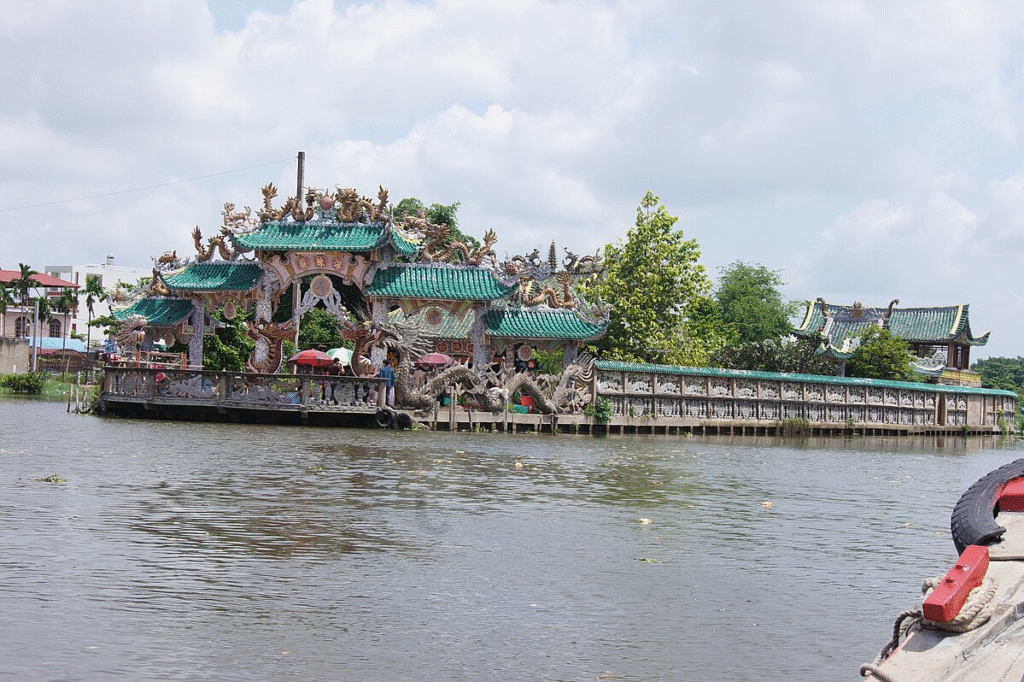
 Phu Chau Floating Temple, widely known as the Floating Temple, stands out as one of the most unique spiritual destinations in Ho Chi Minh City. Thanks to its riverside location and distinctive architecture, the temple attracts both local worshippers and international visitors.
Moreover, the peaceful atmosphere makes it an ideal place for those seeking calm and spiritual balance in the heart of the city.
Vietnam National History and Culture Park: https://www.vietnamtourism.gov.vn
(Source: Wikipedia)
A Brief History of Phu Chau Temple
According to local legends, merchants once traveled and traded along this river for centuries. One night, while resting here, they dreamed of the Five Element Deities—Metal, Wood, Water, Fire, and Earth. These deities blessed them with success and safe journeys.
As a result, the merchants built a small shrine to honor the Five Elements (Ngu Hanh). They believed the deities would protect travelers and bring peace to nearby communities.
Historically, Phu Chau Temple existed before 1800. In 1945, local residents renovated the structure using yin-yang roof tiles and wooden pillars. Although the temple remained small, it continued to serve the community.
Before April 30, 1975, the temple played an important role in revolutionary activities. At that time, local forces used it as a meeting place and a strategic river crossing point.
However, after national reunification, the temple fell into disrepair and remained abandoned for many years. Eventually, in 1990, local authorities formed a management committee. . With official approval in December 1991, restoration began under the leadership of Mr. Luc Cau, a resident of Go Vap District.
Location and How to Get There
Phu Chau Floating Temple is located at 97 Tran Ba Giao Street, Ward 5, Go Vap District, Ho Chi Minh City. Notably, the temple sits on a small islet of about 2,000–2,500 square meters in the Vam Thuat River.
Therefore, visitors must take a short boat ride to reach the temple. The round-trip ferry ticket costs around 15,000 VND per person, which makes the journey both affordable and enjoyable.
Google Maps Phu Chau Temple: https://maps.app.goo.gl/baGjkUuify5bD9kHA #PhuChau#FloatingTemple
Highlights of Phu Chau Floating Temple
Phu Chau Temple impresses visitors not only with its spiritual value but also with its Southern Vietnamese river-style architecture.
1. Unique Interior Architecture
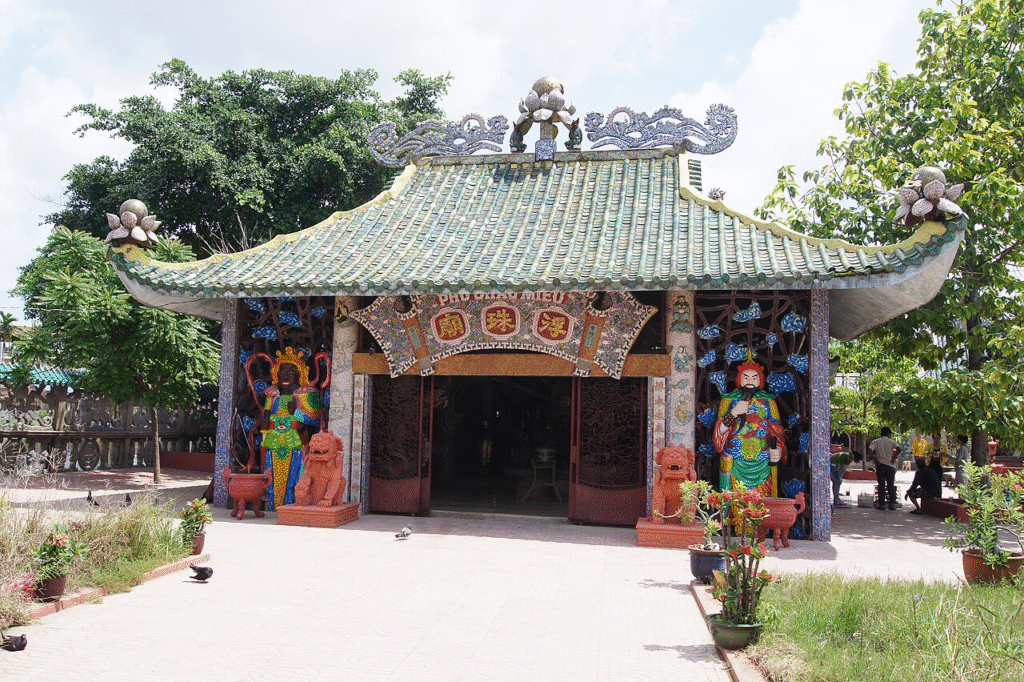
The temple faces south and is built in a “Tam” (three-section) layout, consisting of three connected halls separated by narrow covered courtyards. The roof is layered with emerald-glazed yin-yang tiles, creating a striking visual effect.
Moreover, each rooftop is adorned with symbolic decorations such as dragons chasing pearls, Nine-Level Pagodas, and scroll motifs. The curved roof edges feature the Four Sacred Beasts—Dragon, Qilin, Turtle, and Phoenix—along with floral and river-inspired patterns.
Inside, the walls are painted deep pink with red door frames. Intricate reliefs of dragons and phoenixes, along with porcelain inlays, cover arches and domes. Additionally, folk-belief mosaics line the walls. Outside the main hall, a small shrine honors the Tiger Deity, while inside stands a rock altar with five tiger statues in powerful stances.
(Source: Wikipedia)
2. Sacred Worship Spaces
The temple divides its worship space into three main zones: the Front Hall, Middle Hall, and Main Sanctuary.
- Front Hall: At the center stands Maitreya Buddha. On both sides, worshippers honor Shakyamuni Buddha and the Earth Mother Goddess. In front, the Eighteen-Armed Avalokitesvara sits on a lotus throne. Along the walls, visitors can see reliefs of the Eighteen Arhats.
- Middle Hall: This area worships Sun Wukong (Monkey King). Wooden carvings surround the altar and depict celestial maidens offering peaches. A narrow courtyard with two large incense burners connects this hall to the main sanctuary.
- Main Sanctuary: At the center, the altar honors the Five Element Holy Mothers, represented by five wooden statues. In front, worshippers pay respect to Ba Chua Xu Chau Doc and ancestral spirits. To the right, the temple worships Guan Yu, while Bao Zheng stands on the left. Opposite the Five Elements altar, additional shrines honor the Golden Mother Goddess, Earth Goddess, Dragon Deity, and Guardian Deities. Colorful reliefs of cranes, pine trees, and Maitreya Buddha decorate the walls.
3. Cool and Peaceful Atmosphere
Because water surrounds the temple on all sides, the air remains cool throughout the year. Furthermore, a nearly 100-year-old banyan tree provides natural shade across the courtyard.
As a result, visitors can relax comfortably on stone benches while enjoying river views and a calm spiritual setting.
Why You Should Visit Phu Chau Temple
Many locals consider Phu Chau Temple one of the most sacred temples in Saigon. People often come here to pray for peace, health, and success. After their wishes come true, many return to give thanks.
In addition, the temple’s riverside setting and ancient design create a rare sense of tranquility within the city. You can visit the temple year-round. However, the busiest and most vibrant times occur during the full moon of the first, second, and seventh lunar months.
Conclusion
If you are looking for a sacred spiritual destination combined with unique architectural beauty, Phu Chau Floating Temple is truly a place you should not miss. Come here to experience peace, history, and cultural charm in the heart of Ho Chi Minh City.