Kha Y Tran
 Thien Hau Temple is one of the most sacred places for praying for love and good fortune in Ho Chi Minh City. Many locals and tourists visit the temple every year. They come to worship, seek blessings, and admire its unique Chinese architecture.
Vietnam National History and Culture Park: https://www.vietnamtourism.gov.vn
History of Thien Hau Temple
People believe Thien Hau, also known as the Holy Mother of Heaven, protects sailors and fishermen. Because of this belief, Chinese merchants worshipped her after they safely crossed the sea from Guangdong, China.
Later, when Chinese communities settled in Vietnam, they brought this belief with them. As a result, many temples dedicated to Thien Hau appeared across the country.
The Tuệ Thành Chinese community built Thien Hau Temple in 1760. They contributed money and labor to complete the structure. Over more than 260 years, the temple has undergone several restorations. However, it still preserves its original Chinese design.
In 1993, the Vietnamese government recognized the temple as a National Architectural and Artistic Heritage Site.
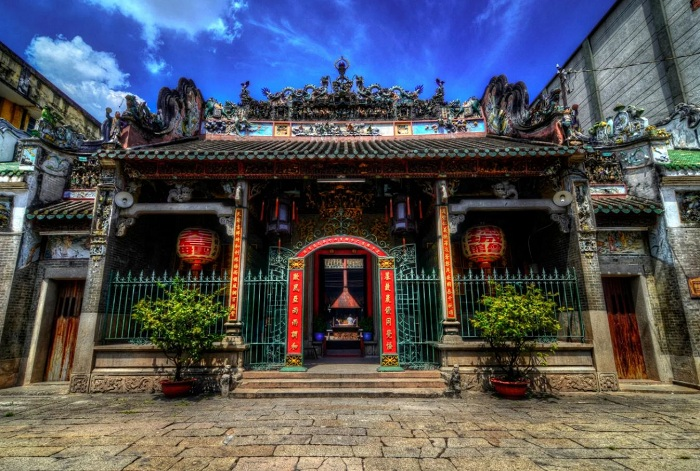
(Source: Vinpearl)
Location and Cultural Significance
Thien Hau Temple stands at 710 Nguyen Trai Street, District 5, in the heart of Cho Lon (Chinatown). Right next to the temple, you can find the Tuệ Thành Assembly Hall, a key gathering place for Cantonese descendants.
Today, the temple plays an important role in local spiritual life. It also reflects the long-standing cultural influence of the Chinese community in Ho Chi Minh City.
Google Maps – Thien Hau Temple: https://maps.app.goo.gl/YkfiDS6iqBLBm9sb8
Unique Chinese Architecture
The temple follows a classic Chinese architectural layout. It includes four connected buildings that form a shape similar to the Chinese characters “口” and “国”.
At the center, a sky well courtyard brings in natural light and fresh air. This design keeps the interior cool and comfortable.
Artisans decorated the temple with carvings of flowers, birds, and mythical animals. Red-and-gold calligraphy panels appear throughout the halls. You can also see reliefs of the Four Sacred Creatures.
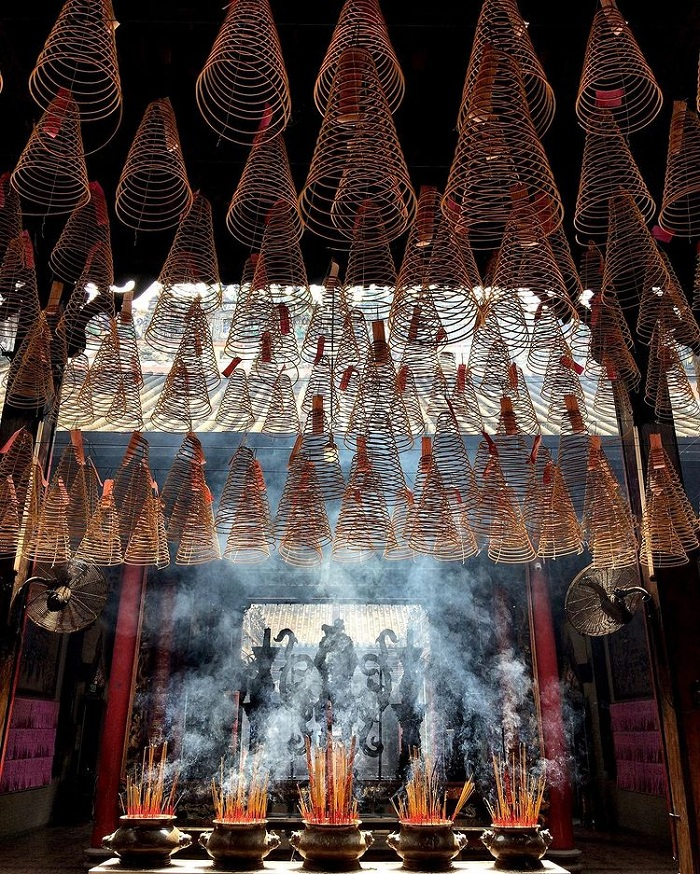
(Source: Vinpearl)
1. Front Hall
When visitors enter the front hall, they see the altar of Phúc Đức Chánh Thần on the right. On the left stands the altar of Môn Quan Vương Tả. Stone steles and murals here tell stories about Thien Hau’s divine powers at sea.
2. Middle Hall
The middle hall displays the Phát Lan incense burner set, which includes five finely carved pieces. On both sides, ancient dragon boats appear with gilded palanquins. The temple uses these items during Thien Hau’s annual procession.
3. Main Hall
The main hall serves as the central worship area. It has three sections:
- The central altar enshrines a 1-meter-tall wooden statue of Thien Hau
- Kim Hoa Lady stands on the right, while Long Mau Lady stands on the left
- Side chambers worship Quan Thanh, Ksitigarbha, and the God of Wealth
Highlights You Shouldn’t Miss at Thien Hau Temple
1. Valuable Ancient Relics
Visitors can admire over 400 ancient artifacts inside the temple. These include embossed reliefs of dragons, qilins, turtles, and phoenixes. Ceramic statues imported from China decorate the roof and walls.
The temple also preserves incense burners, bronze censers, 10 lacquered boards, 9 stone steles, 2 bells, and 7 deity statues.
2. A Sacred Place for Praying for Love and Fortune
Many people visit Thien Hau Temple to pray for love, happiness, and family harmony. In particular, the temple has a strong reputation for love blessings. Numerous visitors believe their wishes come true after praying here.
Young visitors also enjoy drawing oracle sticks. This ritual helps them seek guidance for the future.
3. A Stunning Check-in Spot
In recent years, the temple has also become a popular check-in location, especially during Lunar New Year. Thanks to its ancient architecture and nostalgic ambiance, it is perfect for traditional outfits and cultural photography.
The Vibrant Thien Hau Festival
You can visit the temple at any time of the year. However, the most exciting period falls between the 22nd and 24th days of the third lunar month.
During the festival, locals carry Thien Hau’s statue in a procession around the temple. At the same time, dragon dances, lion dances, and traditional music performances create a lively atmosphere.
Conclusion
Overall, Thien Hau Temple is one of the oldest spiritual landmarks in Saigon. It combines sacred beliefs, rich history, and traditional Chinese architecture. Therefore, it remains a meaningful destination for both worship and cultural exploration.
If you seek peace, love, blessings, or cultural insight, this temple deserves a place on your travel list.
#thienhau