Kha Y Tran
 The Hung Kings Memorial Temple is located in District 9, Ho Chi Minh City. It is a sacred place for visitors who want to explore Vietnamese history and culture. More importantly, the temple honors the Hung Kings, the founders of the nation. Therefore, it holds deep spiritual and historical value.
In addition, the temple is not only a religious site. It is also a cultural landmark that reflects Vietnam’s identity through architecture, symbols, and stories from ancient times.
History of the Hung Kings Memorial Temple
The temple is part of the National History and Culture Park, which covers more than 400 hectares. Specifically, it is located in Long Binh Ward, Thu Duc City. The site sits on a hill over 20 meters high and is about 20 kilometers from the city center.
The project was designed by architect Nguyen Truong Luu. Construction began in 2002 and was completed in 2009. As a result, the temple became one of the most iconic cultural works in southern Vietnam. Moreover, its design has won several national and city-level architecture awards.
Vietnam National History and Culture Park: https://www.vietnamtourism.gov.vn
A Peaceful Journey from the Gate to the Hilltop
Overall, the space feels calm and respectful. At the same time, it blends nature with both modern and traditional design.
1. Sun Square
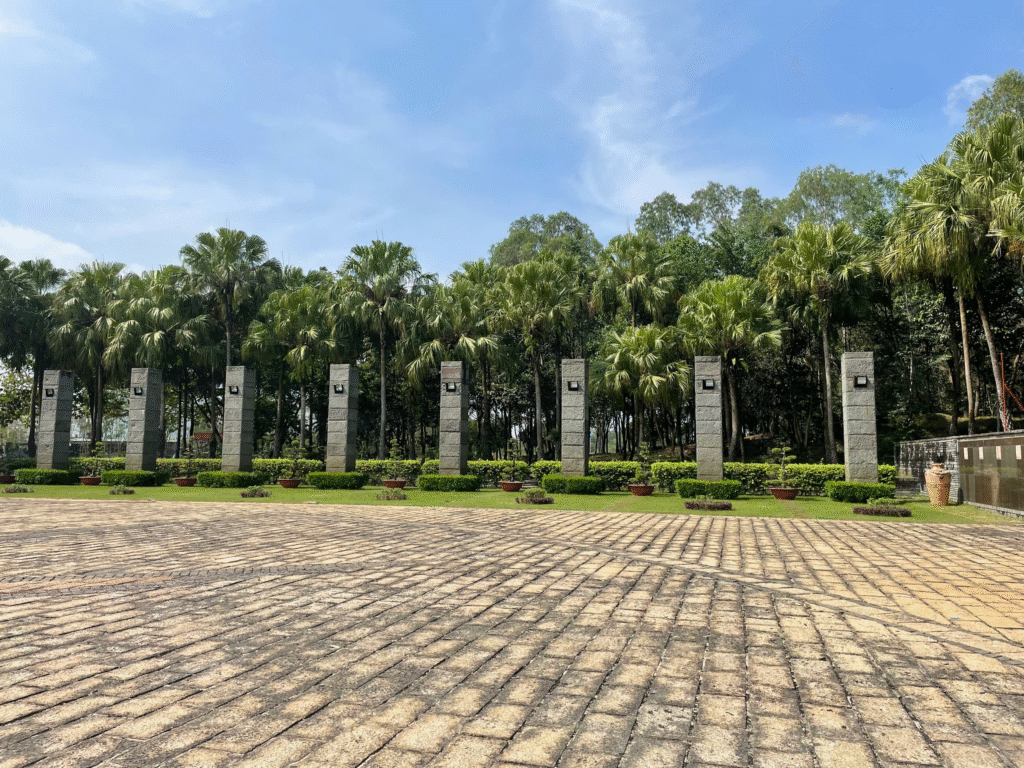
First, after passing the main gate, visitors arrive at Sun Square. This square covers about 4,000 square meters. The ground patterns are inspired by the Dong Son bronze drum, a famous symbol of ancient Vietnam.
In addition, this area hosts important ceremonies and festivals. Most notably, major events take place here during the Hung Kings’ Commemoration Day.
On both sides of the square stand 18 stone pillars, each 6 meters tall. Each pillar represents one Hung King. As a result, the space feels strong and powerful, much like the rhythm of ancient drums.
2. Bamboo Path to the Temple
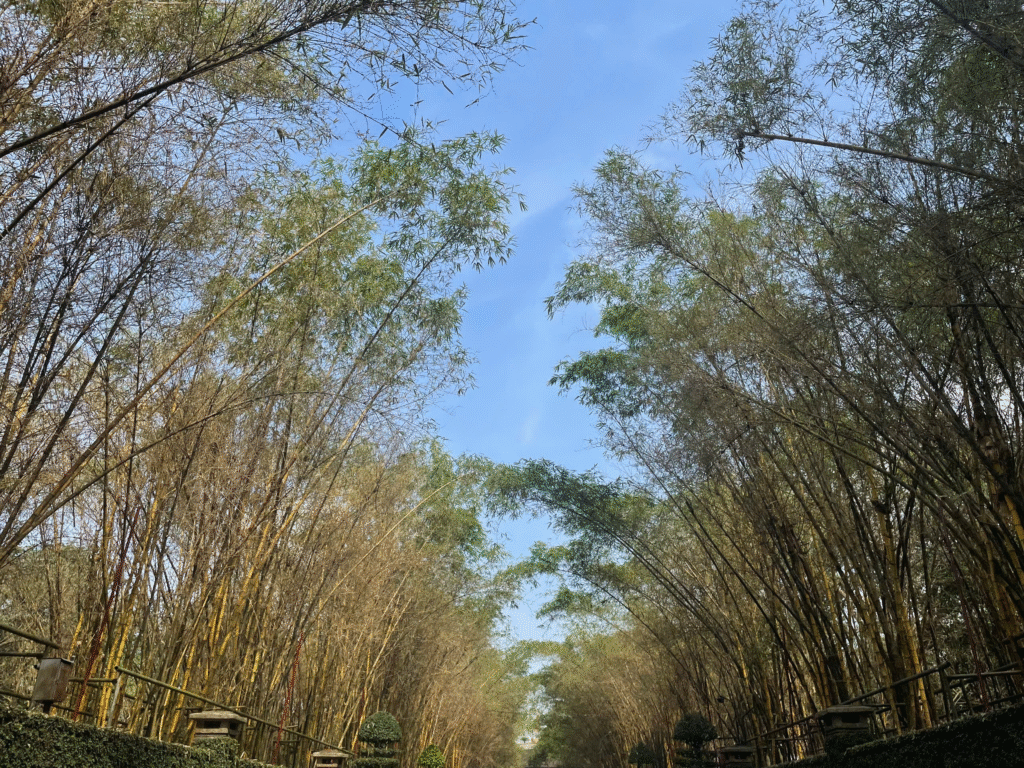
Next, a 360-meter bamboo path leads visitors up the hill. Bamboo is a familiar symbol in Vietnamese culture. It represents strength, endurance, and loyalty.
As visitors walk along the path, they can enjoy fresh air and natural sounds. Moreover, the gentle rustling of bamboo leaves creates a sense of peace. Therefore, the journey feels like a return to one’s roots.
3. Stele House
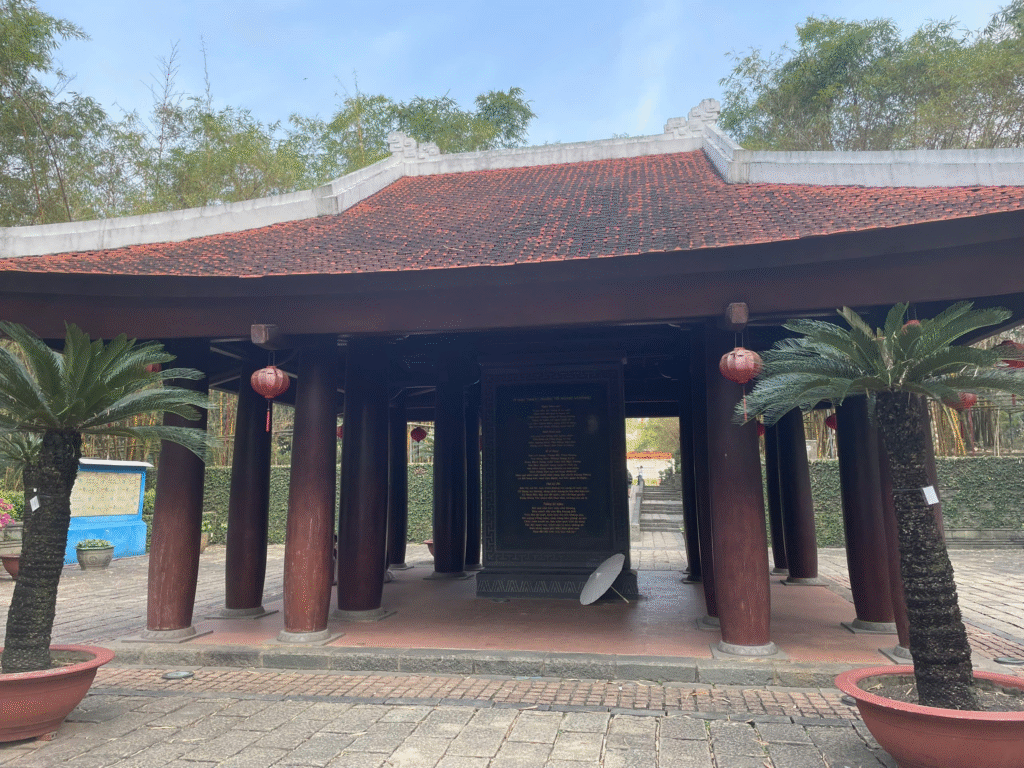
Along the way, visitors will see a Stele House. This structure has a square shape and a curved tiled roof. Inside, there is a stone stele that records the merits of ancestors and their brave fight against invaders.
More importantly, the text reminds future generations to protect national values. As a result, this stop encourages reflection and pride in Vietnamese history.
Temple Structure and Symbolic Meaning
1. Main Temple Design
At the top of the hill stands the main temple. It has a square shape and is rotated 45 degrees from the main axis. Overall, the design symbolizes the Lac Bird, a sacred totem from the Dong Son period.
The temple layout includes three main areas:
- Ceremonial Courtyard
- Festival Courtyard
- Contemplation Courtyard
Each area has its own meaning. However, all of them connect tradition with modern design.
2. Ceremonial Courtyard
The Ceremonial Courtyard is the most sacred area. It houses altars dedicated to the Hung Kings, Lac Long Quan, and Au Co. In addition, the Gods of Earth and Water are also honored here.
On both sides, there are eight worship chambers. These are dedicated to legendary figures such as Lac Lords and Tan Vien Mountain Saint. Therefore, this space is central to worship and pilgrimage.
3. Festival Courtyard
Below the main altar is the Festival Courtyard. This area is built mainly from stone and has a more modern look. Here, 15 stone pillars stand upright. They represent the 15 tribes that formed the ancient Van Lang nation.
Moreover, the corridors display 33 stone blocks. These blocks symbolize the Spratly Islands. At the same time, ceramic murals show daily life during the Hung Kings era.
4. Contemplation Courtyard
At the highest level is the Contemplation Courtyard. The space combines square and circular shapes. Together, they represent earth and heaven.
At the center, a small pavilion protects the Hoang Ha bronze drum, which is thousands of years old. In addition, 54 stone pillars surround the area. These pillars represent the 54 ethnic groups of Vietnam. As a result, the space clearly expresses national unity.
Cultural and Historical Value
The Hung Kings Memorial Temple is more than a spiritual site. It is also a living museum of Vietnam’s early history. Every detail carries meaning, from bamboo trees to bronze drums.
Furthermore, the temple plays an important educational role. It helps young generations learn history through real experiences. Therefore, it strengthens national pride and cultural awareness.
Every year, on the 10th day of the third lunar month, thousands of people visit the temple. They come to offer incense and join traditional ceremonies.
Conclusion
In conclusion, the Hung Kings Memorial Temple in Ho Chi Minh City is a special cultural and spiritual landmark. It offers a calm atmosphere, deep symbolism, and valuable historical lessons. Therefore, it is an ideal destination for tourists, students, and anyone who wants to reconnect with Vietnam’s origins.
Explore cultural landmarks in Ho Chi Minh City: https://www.saigontourist.net
Hastag
#HungKingsMemorialTemple #HungKingsTemple #VietnamHistory